|










      |
   |
 |
VIN 194679S701106
|
|
|
|
|
|
|
|
|
|
|
|
|
|
|
| Car Year: | 1969 | ||||
| Car's approximate birthday: | September 12, 1968 | ||||

| |||||
| Owner: | David Kelly | ||||
| City: | Queensland | ||||
| Country: | Australia | ||||
| Car website | https://www.vetteweb.com/features/vemp_0705_1969_l71_corvette_roadster/index.html | ||||
| Purchase date: | 01/01/2007 | ||||
| Status: | Current Owner | ||||
| State: | Project Car | ||||
| Exterior: | 983 Fathom Green | ||||
| Interior: | 427 Green (Vinyl) | (3.14%) | |||
| Softtop: | Other Color | ||||
| Wheels: | Other Color | ||||
| Delivery Dealer Zone: | Unknown | ||||
| Delivery Dealer Code: | Unknown | ||||
| Options: | RPO | Option | Percentage Sold [%] |
Sales Price [$] |
|
| 19467 | Base Corvette Convertible (BB 435hp) | 42.91% | 4,438.00 | ||
| A82 | Headrests | 100.00% | 17.95 | ||
| C07 | Auxiliary Hardtop (for convertible) | 20.32% | 252.80 | ||
| K66 | Transistor Ignition System | 14.71% | 81.10 | ||
| L71 | 427ci, 435hp Engine | 7.02% | 437.10 | ||
| N40 | Power Steering | 58.99% | 105.35 | ||
| Total | 0.000000000051773% (1 Cars) |
5,332.30 | |||
| Factory job nr.: | Unknown | ||||
| Export Car: | Non Export Car | ||||
| Car history: | |||||
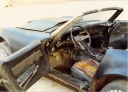
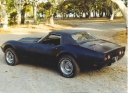
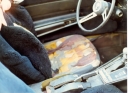
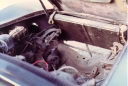
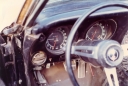
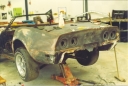
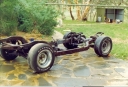
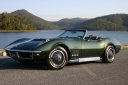
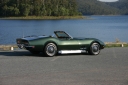
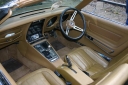
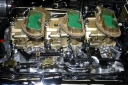
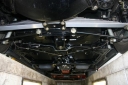
| Dragged in from a chicken farm somewhere in Southern California in the early nineties this Vette was imported into Australia for an anxiously waiting customer. On its arrival the poor guy that had been waiting for this car for several months was totally devastated by its condition and consequently reneged on the sale. It was sold on the premise that it needed a motor, trim and paint, when in fact the car was a total basket case. It was then purchased by Ross Spurling in South Australia, who had far more passion, enthusiasm, and commitment than he possessed in common sense. This '69 Vette was determined to be a L71 roadster with many factory options. While not having the original motor, it had some tell tale signs of a high performance past. Remnants of the K66 ignition system was a clue, the rear sway bar was a further indicator, sceptics could argue the 6500 redline tacho was a 'plant', but when the date codes on the back of all the gauges were the same, and dated near the production date of the car, the signs were looking good. The final clue that lead us to believe this was a genuine Tripower car was the non vented gas tank that was only fitted to the 400HP & 435HP Tripower vehicles. The car was deemed to be worth the effort to bring back to life. If you think it's expensive and time consuming trying to find parts to properly restore a car, spare a thought for the Corvette enthusiasts in Australia. Every time you spend a dollar on your car here in the States it costs these Aussies somewhere between two and three times as much, with exchange rates, taxes, freight, etc. To further compound costs, back then in the early nineties, it was compulsory to convert all vehicles to Right Hand Drive (RHD). Fortunately these days, these requirements have been relaxed, and most states of Australia allow Left Hand Drive (LHD) registration on vehicles over 25 years of age. Still, the time and expense to properly engineer a RHD conversion was significant. This vehicle had 900 hours invested in the conversion alone. The motor had to be moved across to the left to accommodate the steering box, this in itself created all sorts of other challenges, the harmonic balancer now hit the front cross member, so the cross member had to be altered, the power steering pump now got in the way of the chassis, so new p/s brackets had to be engineered, the fan shroud had to be remade to make allowance for the relocation of the motor, the transmission hump had to be moved to give enough transmission clearance: the list goes on. The criteria for restoring this car was to keep it basically stock in appearance but use more modern technology where available to give a better overall result. The chassis was sandblasted, rustproofed and then powdercoated in gloss black. The underside of the body was hand sanded, undercoated, stoneguarded, and then painted in gloss 2-pack black paint. The car whilst originally Fathom green, now uses a Ferrari Green from a similar era, the trim was redone in saddle leather rather than the original green vinyl. Sourcing the correct 4 bolt 427 block with the correct casting numbers proved a real challenge, as did sourcing the 840 casting number heads. These things are hard enough to find in the States, and it certainly proved no picnic trying to source from Australia, but persistence won out in the end. It was no easier tracking down an original Tripower manifold and carby setup either, but as luck would have it, the manifold was discovered at a local swap meet and brought from a guy who didn't have a clue what it was from, so the price was right: it's good to have a win now and again. Motor was assembled by local engine guru Bob Sceri, who installed TRW 11:1 forged pistons, further upgraded Crane mechanical cam, Harland Sharp roller rockers, nice three angle valve job with cleaned up ports and blue printed and balanced. Horsepower increased from 435 to around 550. Another interesting discovery during the restoration was the gearbox. It was a genuine M22, obviously non original for this car yet it had a Corvette serial number stamped on it. Our conclusion is that this box is super rare, and one L88 owner out there would be real keen to get hold of this. Over 2000 hours were invested in the restoration to bring this vehicle back to life. It has gone from being, at the time, the worst Corvette ever seen, to now being amongst the best". Ross Spurling however enjoys the journey of the build more than maintaining the car once it's finished and after treasuring the 69 for a number of years and with dreams of a real wild creation in mind it was sold to good friends and current owners David and Barbara Kelly in Queensland who have owned it for the past 18 months. During this period the carburettors have been overhauled and made better than new and the engine bay tidied up a little. March 16, 2009. |
|||||
| For Sale: | No | ||||
|
Number of visits on this page by other users: 705 |
|||||

|
|||||