|










      |
   |
 |
VIN 1G1AY878?C5116552
|
|

|
|
|

|
|
|
|
|
|
|
|
|
|
|
|
|
|
|
| Car Year: | 1982 | ||||
| Car's approximate birthday: | June 16, 1982 | ||||
| Owner: | eBay Motors bestofshowautomotive | ||||
| City: | Mentor | ||||
| State: | Ohio | ||||
| Country: | United States | ||||
| Purchase date: | Undefined | ||||
| Status: | Current Owner | ||||
| State: | Nice Driver | ||||
| Exterior: | 19 Black | (9.28%) | |||
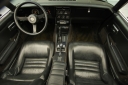
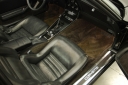
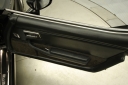
| Interior: | 182 Charcoal (Leather) | (10.65%) | |||
| Wheels: | Other Color | ||||
| Delivery Dealer Zone: | Unknown | ||||
| Delivery Dealer Code: | Unknown | ||||
| Options: | RPO | Option | Percentage Sold [%] |
Sales Price [$] |
|
| 1YY87 | Base Corvette Sport Coupe (200hp) | 73.40% | 18,290.07 | ||
| AG9 | Power Driver Seat | 88.89% | 197.00 | ||
| AU3 | Power Door Locks | 94.21% | 155.00 | ||
| C49 | Rear Window Defogger | 66.46% | 129.00 | ||
| DG7 | Electric Sport Mirrors | 79.90% | 125.00 | ||
| N90 | Aluminum Wheels | 66.30% | 458.00 | ||
| U75 | Power Antenna | 61.23% | 60.00 | ||
| UM6 | AM-FM Radio, etr stereo with cassette | 80.12% | 423.00 | ||
| Total | 0.000013483795506% (1 Cars) |
19,837.07 | |||
| Factory job nr.: | Unknown | ||||
| Export Car: | Non Export Car | ||||
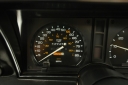
| Other details: | Mileage: 32,946 Added to Registry 03/07/2010 |
||||
| Car history: | |||||
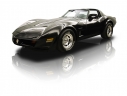
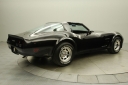
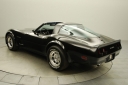
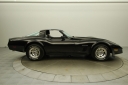
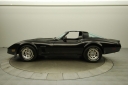
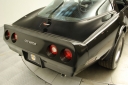
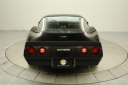
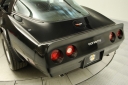
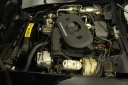
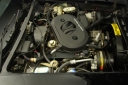
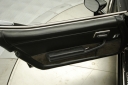
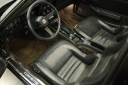
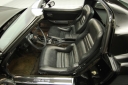
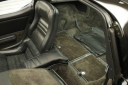
| 1982 was the last hurrah for the C3 Corvettes introduced back in 1968, marking the end of the longest production run for a single Corvette model. Along the way, the Corvette evolved from a terrifyingly powerful, yet crude brute with the legendary 427/435 under its hood in '68, to a more refined machine like this beautiful black 1982 coupe. Wearing almost all its original paint only the nose has been repainted this 32,945 mile Corvette is about as nice as drivers get. It hasn't been restored to perfection, and it has been exercised enough to stay healthy throughout its nearly 30-year life, but was clearly babied the entire time. With all the ultra-high-dollar, 0-mile cars we get here at Best of Show Automotive, a clean one that you can drive and enjoy today really stands out. Ultra-low-mile cars are great for museums, but if you really want to enjoy your car, putting one with extremely low miles back on the road can often be a challenge. No, the very best cars are those that have been regularly exercised and enjoyed over the years. 1982 was a great year for Corvettes with a lot of significant upgrades. Of course, it benefits from the awesome 1978 restyle that updated the car's appearance, but mechanically it boasted a lot of changes that could just as easily have been left for the all-new C4 Corvette that would come out in 1984 (of note, there is one 1983 Corvette.—GM then went directly to the 1984 C4). Under the hood is the famous Cross-Fire fuel injection system, which was an early version of what we today call throttle-body fuel injection. The system is centrally located like a carburetor on top of the engine, but fuel is delivered under high pressure by injectors inside the throttle body housing and fed by a high-pressure fuel pump in the gas tank. The air and fuel was mixed in the throttle body and drawn into the combustion chambers just as it was with a carburetor. The result was a 350 cubic-inch Corvette motor that made 10 more horsepower than the year before—now up to 200—while simultaneously meeting the stricter emissions standards imposed in 1982. The engineers didn't stop there, however. There's also a new 4-speed automatic transmission with overdrive, the only transmission available in 1982. It is based on the older 3-speed automatic with a tall overdrive gear and lockup torque converter, and contributed to the '82 Corvette's increased efficiency. It was the only transmission available in the Corvette that year and proved to be a reliable partner for the V8 engine. Out back, the suspension was upgraded with the now-standard fiberglass leaf spring. Corvettes had used transverse leaf springs both front and back for years, and in '82, a lighter and more responsive fiberglass spring replaced the steel spring used the year before. In addition to reducing weight by a substantial amount, it was also rust-proof and not subject to the squeaks and groans that occasionally plagued its steel cousins. The 1984 Corvette C4 debuted with fiberglass springs front and rear, and all Corvettes since have used them. In addition to being a super-desirable black on black car, this C4 is also loaded with options, including cruise control, power seats, power mirrors, and an AM/FM/cassette stereo system. The wheels are 15-inch polished aluminum with simulated knock-off hubs wearing 255/60/15 BFGoodrich Radial T/A tires that look almost new. This car also comes with the original owner's manual and a stack of factory service manuals. Putting a car on the road is the best way to enjoy this hobby, and there's no better way to do that than with a car like this Corvette. Look at all the positives on a car like this: it's great-looking (everybody will recognize it), offers great performance, impressive reliability, fun handling and a load of luxury features that make it a pleasure to drive. Then add in the fact that it is the last of the C3s in a rare color combination, and you have a fun car that will hold its value over the long haul, and that makes you a smart investor, too. There's no reason a fun car like this has to depreciate while you enjoy it, right? |
|||||
| For Sale: | No | ||||
|
Number of visits on this page by other users: 220 |
|||||

|
|||||